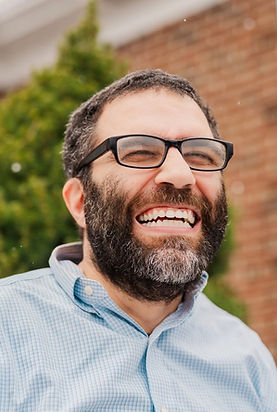
Elect
U.S. House of Representatives, District 2
What about you and your background makes you the best candidate for this office?
I have lived a life that reflects true appreciation for our democracy and matches the struggles of people in the district. I fled an authoritarian regime in Iran as a child, grew up in poverty, committed myself to public service, and relied on public benefits, ELL instructors in public schools, and other programs to succeed.
Beyond that, I've spent my career building things that work: I taught in public schools, chaired my daughter's Local School Improvement Council, and built a coalition of over 400 organizations — from the Reagan Presidential Foundation and Cato Institute to the National Urban League and National Education Association — to strengthen civics education nationwide. I also started a local organizing group that grew from a dozen people in a church basement into the largest protests in Morgantown's history, and that organizing has since spread statewide.
My family's story taught me the American Dream is a collective effort. I'll bring that same bridge-building, hands-on experience, and accountability to Congress — running the most transparent, accessible representation this district has seen, with open town halls for every West Virginian, whether they vote for me or not.
What are the top three statewide issues you see for West Virginians at this time?
First, affordability. Working families are being squeezed by rising grocery and energy costs, benefit cliffs that punish people for taking a raise or promotion, and a lack of living wages. Tariffs and cuts to SNAP and Medicaid have made this worse. Rising gas prices that have come from the war have crippled people.
Second, a giving people a voice in decisions that affect them, ranging from whether there’s a data center or transmission line in their backyard to how budgets are spent on immediate community needs.
Third, chronic underinvestment in the people who hold our communities together — teachers, nurses, and first responders. We've let education, healthcare, and public safety become afterthoughts while some in Washington cut budgets and blame the workers instead of investing in them.
What are the top three issues you see for constituents residing within the district you are seeking to represent?
First, reliable and clean drinking water and aging infrastructure. This touches communities across the Second District, not just one region, and it's a basic government responsibility we've failed to meet.
Second, the unchecked growth of data centers and outside corporate development that doesn't return value to our communities — driving up energy costs and straining local resources while the benefits flow elsewhere.
Third, economic opportunity and workforce stability — family-sustaining wages, affordable housing, and fixing benefit cliffs so pursuing an education or promotion doesn't mean losing the support a family depends on.
What is your position on data centers being built in our state?
The AI economy is seeking to replace workers, supplant human interactions, and recreate local communities. I want to hold the people doing this accountable to everyday citizens. I'm not opposed to new industry or technology in West Virginia, per se, but data centers shouldn't be built in ways that benefit outside corporations at the expense of our communities. Too often these projects drive up electricity costs for everyday ratepayers, strain water resources, and receive generous tax incentives while delivering relatively few local jobs. West Virginia pays the cost; Silicon Valley reaps the benefit.
As your representative, I'll push for real guardrails: transparency about a data center's water and energy usage, protections so residential ratepayers aren't subsidizing corporate power demand, community benefit agreements guaranteeing local hiring and investment, and tax incentives proportional to what a project actually gives back. I will push a federal law so that such projects go through a community referendum. If this is a good deal for communities, they will, themselves, want to approve it.
How do you intend to better serve the education system for children in our state if elected?
Education is personal to me — I've worked in it throughout my career, taught in public schools, and chaired my daughter's Local School Improvement Council. In Congress, I'll fight to reverse federal cuts that have hollowed out school budgets and treated teachers as the problem instead of the solution.
That means real investment in classroom resources, recognition and pay for teachers excelling with their students, and support for pathways like student loan forgiveness to help us recruit and keep good educators in West Virginia. I also built a 400-plus organization coalition — from the Reagan Presidential Foundation to the National Education Association — to push for stronger civics and history education. And I'll keep fighting benefit cliffs that punish parents for pursuing the education and promotions that improve their children's lives.
What is your vision to increase family incomes and opportunity, raise the quality of life, and to make Wood County an area that families want to call home?
My approach is community wealth building — growing Wood County's economy from the inside out rather than chasing outside investment that can leave as quickly as it arrives:
-
Local ownership: helping local businesses, worker cooperatives, and family-owned employers grow, connecting entrepreneurs with local credit unions so capital stays in Wood County.
-
Anchor institutions: encouraging hospitals, schools, and local government to hire and purchase locally, so public dollars circulate through local businesses and workers.
-
Workforce pipeline: partnering technical and community colleges directly with local employers so training matches jobs actually available here.
-
Wage floor: supporting a living minimum wage and workers' right to organize.
-
Benefit cliffs: making sure a raise or promotion doesn't cost a family the support they still need.
-
Fundamentals: reliable water and energy infrastructure, roads, affordable housing, and broadband.
The goal is durable local capacity — local ownership, local skills, local wages — so Wood County families have real, lasting reasons to stay and come home.